Travel to Greece
Day 8 Epidaurus - Mycenae - Nafplio (73 Km.)
(in 3 Km.) Epidaurus: The ruins of Epidaurus were excavated from the 19th century. They have allowed to remove the ruins of the sanctuary of Asclepius, a temple of Artemis, a tholos from the IV century BC, a temple of Aphrodite and especially the theater. In the city there was also a gymnasium, an arena, a stadium, porches and thermal baths. The theater of Epidaurus is among the best preserved in Greece. It was built taking advantage of a mountain slope, with a diameter of 112 meters and 32 rows of seats in the lower part, 20 in the central part and 24 in the upper part, with capacity for 12,000 spectators and the proscenium. In antiquity it was already famous for the harmony of its proportions.
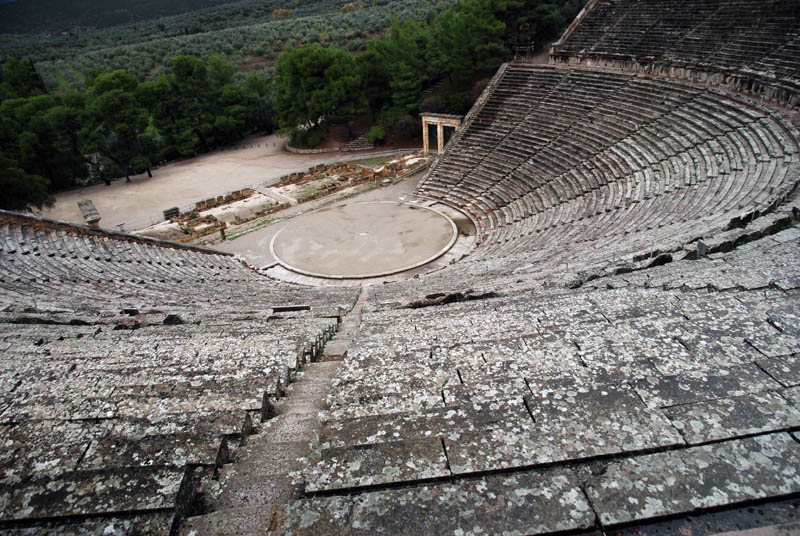
Epidaurus Theatre
It was conceived by the architect and sculptor Polykleitos the Younger in the middle of the 4th century BC., equally responsible of the tholos, notable for its Corinthian columns adorned with beautiful capitals. The ruins of ancient Epidaurus were named a UNESCO World Heritage Site in 1988. The Asclepeion of Epidaurus Archaeological Museum contains a collection of objects mainly from the Asclepius of Epidaurus sanctuary, which was excavated between 1881 and 1928. Among the exhibits are ancient medical instruments, sacred oil lamps, votive offerings, sculptures, reliefs, inscriptions, architectural elements, and also copies of some statues whose originals were brought to the National Archaeological Museum of Athens.
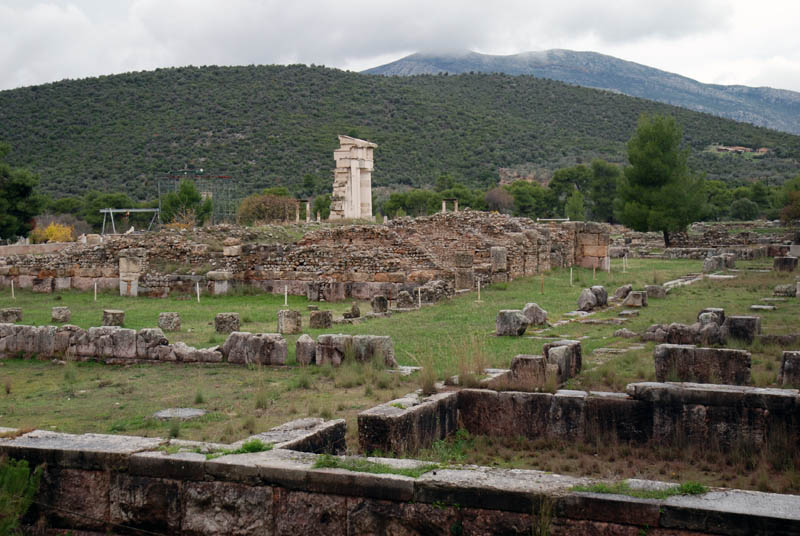
Epidaurus - Gymnasion
(in 46 Km.) Mycenae: After visiting Epidaurus first in the morning, our intention was to spend the rest of the day on the island of Hydra, but the rain makes us change our plans and we go to Mycenae. Among the most visible remains of the Mycenae archaeological site are the cyclopean walls of the ruins of the acropolis and funeral constructions, such as the so-called Treasure of Atreus. It was declared, together with the archaeological site of Tiryns, a World Heritage Site by Unesco in 1999. The name of Mycenae has been used to name the period of Greek history between 1600 and 1100 BC. which is historically called Mycenaean.
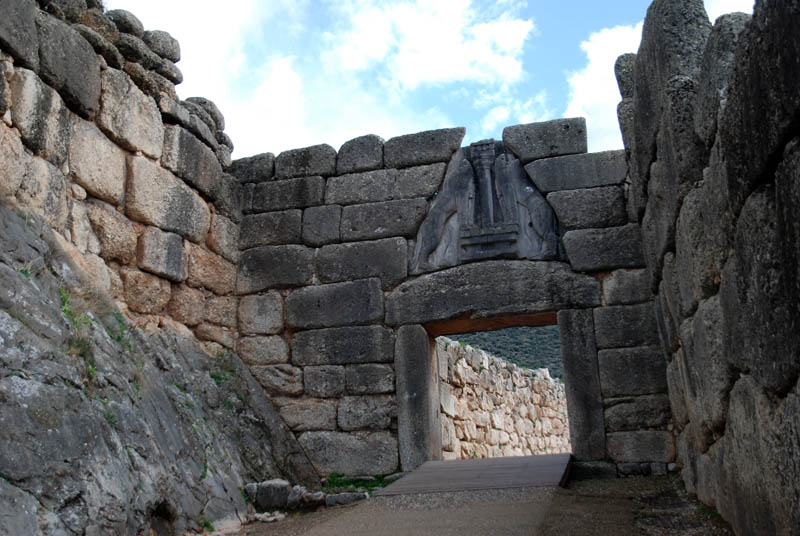
Mycenae - Lion Gate
Outside the acropolis there are several dome tombs (XVI-XIII century BC) that are formed by an open corridor (dromos), a door and a chamber where the domes are circular and elliptical in elevation. The ramparts (1350 B.C.) were built in a style known as Cyclopean, because the stone blocks used were so huge that in later times they were thought to be the fruit of the work of one-eyed giants called Cyclops. They had two doors: the Lion gate and the north door. The Lion Gate (1250 BC), made up of large stone blocks and whose lintel is estimated to weigh around 20 tons, is the most characteristic and well-known architectural execution of Mycenae. On the triangular surface above it, two felines are depicted in relief with their front legs resting on the altar of a Minoan column.

Mycenae - Grave Circle A
The Grave Circle A (16th century BC) is located within the walls, next to the Lion Gate. It contains six grave tombs where richer grave goods were found than in Circle B and with a more marked Cretan influence. We continue up the hill until we reach the royal palace (1350-1330 BC), which is made up of a large central courtyard surrounded by a series of buildings. It was accessed through a propylee. In the east wing of the palace are the "Artists' Workshop", where artisans and artists associated with the palace are supposed to have lived and worked, and the "House of Columns". An underground cistern (13th century BC) 18 m deep, located inside the wall, could provide water to the acropolis in case of siege.
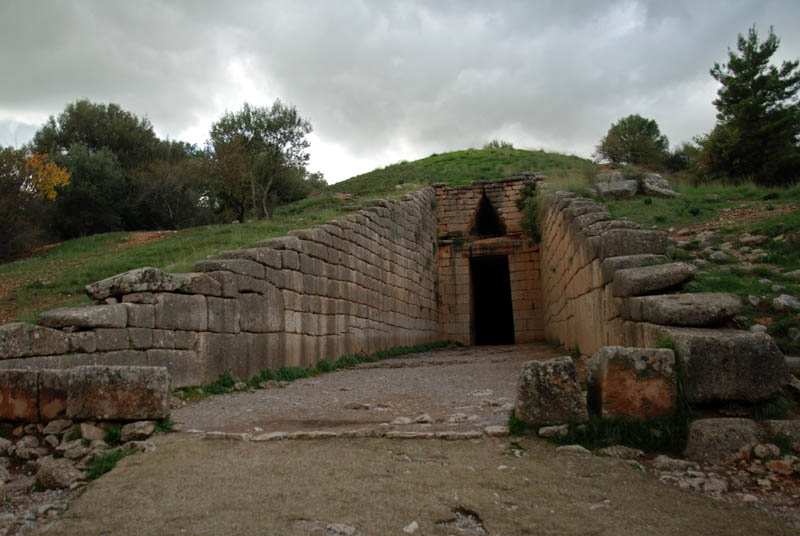
Mycenae - Treasury of Atreus
Leaving through the north door we arrive at the Archaeological Museum of Mycenae, a two-storey building with pieces from the excavations of Mycenae and other places in the surrounding area, which belong to periods between 3000 BC. C. and the Hellenistic period (until the 2nd century BC). It is divided into several sections dedicated, respectively, to daily life during the Bronze Age, funerary uses, the unique characteristics of the Mycenaean civilization, and the evolution of the place during later historical periods. Just 700 meters away we find the Treasury of Atreus, built during the Bronze Age, around 1250 BC. The lintel stone above the door weighs 120 tons, with dimensions of approximately 8.3 x 5.2 x 1.2 m, the most biggest in the world.
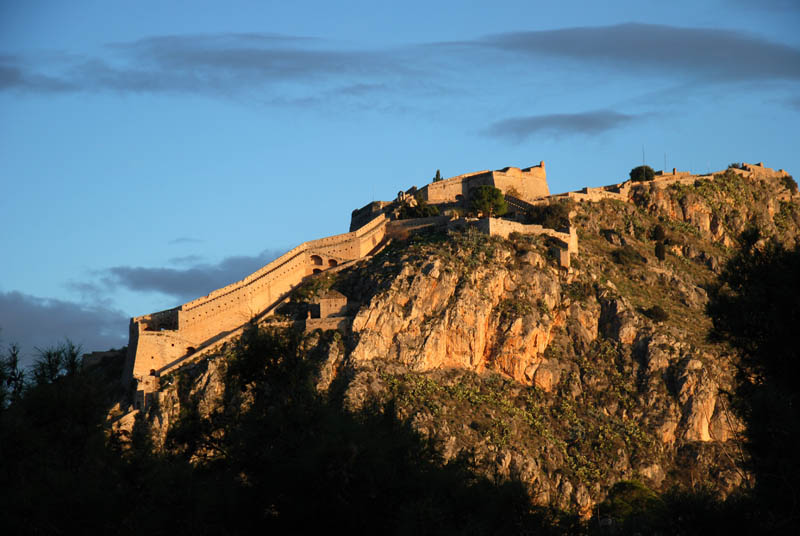
Nafplio - Fortress of Palamidi
(in 24 Km.) Nafplio: We end the day walking around Nafplio again. The Acronauplia ("Inner Castle") is the oldest part of the city. Until the 13th century, it was a city of its own. The arrival of the Venetians and the Franks transformed it into part of the fortifications of the city. It highlights its views of the city on one side and the Palamidi fortress on the other. Palamidi (Greek: Παλαμήδι) is located on the crest of a hill 216 meters high. The fortress was built by the Venetians during their second occupation of the area (1686-1715). One way to access the fortress is through 913 steps that ascend from the lower part of the city (also accessible by car). We ended the day in the tavern "Pidalio Mezedopoleio", where we enjoyed one of our best dinners of the trip.